NDIS guides
Questions to Ask an NDIS Provider Before You Choose

Most people go into their first call with an NDIS provider not really knowing what to ask beyond "do you cover my area." That's fair enough — nobody teaches you this. But a handful of direct questions, put to anyone you're considering, can tell you more in ten minutes than their entire website will.
In short
Ask about their experience in your area, whether you'll see the same support worker regularly, their rates and cancellation policy, how they handle complaints, and how soon they could actually start. Clear, specific answers can help you compare providers and understand what to expect before you choose.
On this page
Why a few direct questions beat a long checklist
You don't need to interrogate anyone. The point of asking isn't to catch a provider out — it's that how someone answers tells you more than what they say on their website. Clear, specific answers make it easier to understand how the provider communicates and what you can expect from the service. If an answer is vague, ask for clarification, or ask the provider to put the details in writing.
The questions worth asking
1. Do you cover my area?
Local coverage can be useful to ask about, particularly if regular visits are important to you. Ask which suburbs they currently service and whether they have support workers available in your area.
Good answer: a clear answer about the areas they currently service and whether they have workers available nearby.
2. Are you a registered NDIS provider?
Ask whether the provider is registered and, if so, which services or supports their registration covers. Your plan management type and the type of support you need can affect whether you actually need a registered provider — our registered vs unregistered guide covers the distinction.
Good answer: a clear yes or no, plus what that means for your specific plan.
3. Will I see the same support worker regularly?
Ask whether you'll usually have the same support worker and what happens when your regular worker is unavailable.
Good answer: a clear explanation of how regular workers are allocated and what happens when someone is unavailable.
4. What training and checks do your support workers complete?
Ask what screening, first aid and other training workers complete, including any training relevant to your specific support needs.
Good answer: specific information about the screening and training relevant to the support you'll receive.
5. What are your rates, and do any other charges apply?
Ask for the applicable hourly rate and whether travel or other additional charges apply, and how those charges are calculated. Billing confusion usually starts here if it isn't confirmed upfront. Our guide to NDIS provider costs and pricing goes into what to expect.
Good answer: a clear rate and an explanation of any travel or additional charges, preferably in writing.
6. What's your cancellation policy?
Plans can change, so it's worth understanding the cancellation terms before support begins.
Good answer: a clear explanation of the notice period and any applicable cancellation fees.
7. How do you handle complaints or feedback?
It's useful to know how the provider handles complaints, concerns and feedback before you start receiving support.
Good answer: a named contact or process, not "just call us."
8. How soon could support actually start?
Availability varies between providers, so ask when they could realistically begin your support.
Good answer: a realistic timeframe based on their current availability.
Worth remembering
You're not trying to trip anyone up. You're just paying attention to whether the answers are specific and honest — that's usually a good preview of what working with them will actually be like.
Answers that should give you pause
- Vague answers to specific questions — especially around pricing, worker consistency or availability.
- Pressure to sign quickly — take the time you need to understand the service agreement and terms.
- Reluctance to provide important details in writing — ask for rates, cancellation terms and other key arrangements in writing.
- No clear explanation of complaints handling — a provider should be able to explain how you can raise a concern or make a complaint.
What to do with the answers
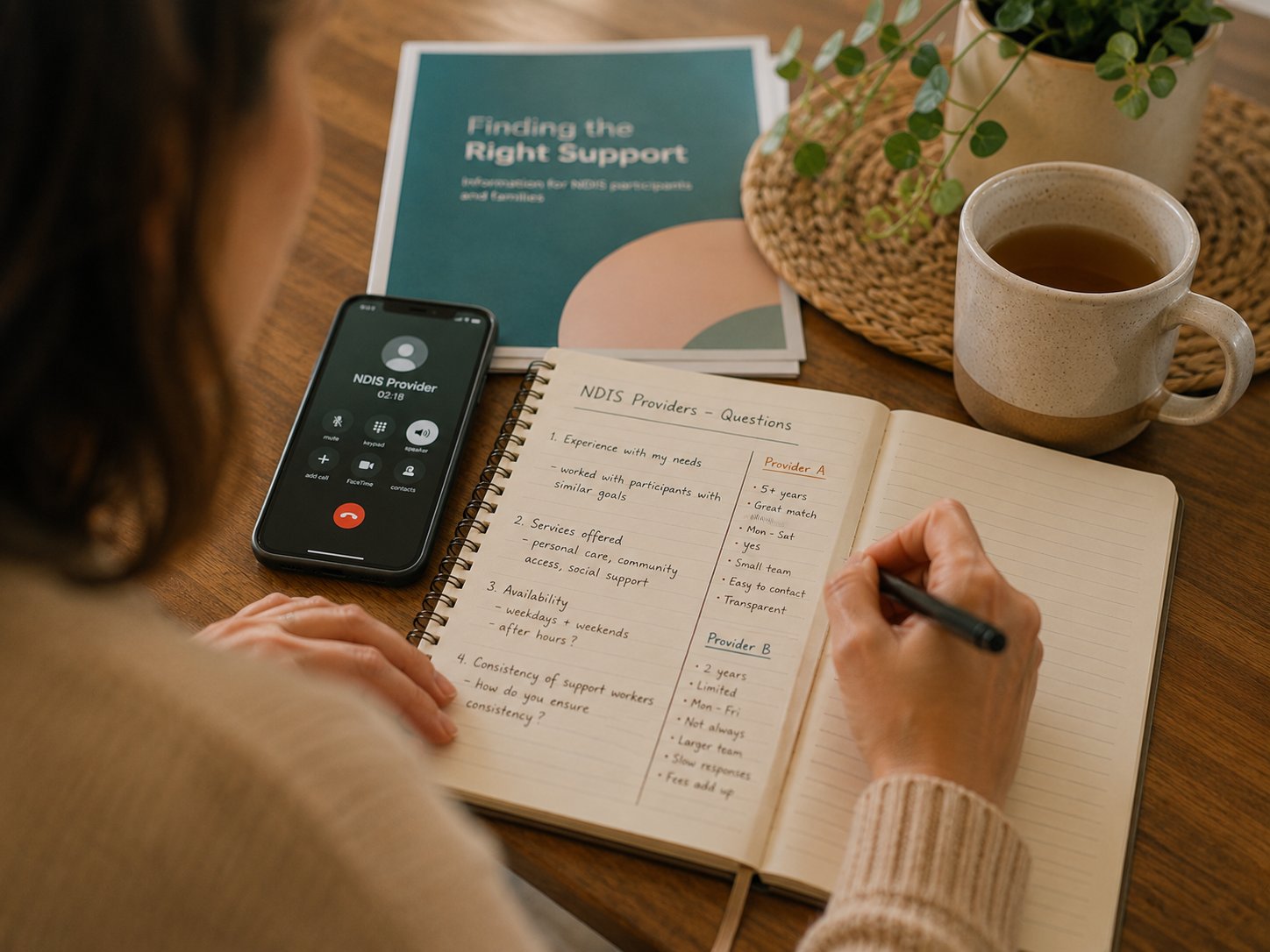
Write down what each provider says, even briefly — after two or three calls, answers start to blur together. If a provider's answers are clear, specific and consistent across your questions, that's a genuinely good sign. Choosing well also comes down to consistency, pricing and fit — the rest of that decision is covered in our guide to choosing an NDIS provider in Melbourne.
These questions are worth asking wherever you're comparing providers across Melbourne's west, whether that's in Point Cook or elsewhere.
Key takeaways
- Eight direct questions tell you more in ten minutes than a provider's whole website will.
- How they answer matters as much as what they answer — vagueness on pricing or worker consistency is the signal.
- Ask for rates, travel charges and cancellation terms in writing before you agree to anything.
- Write the answers down. After a few calls they genuinely blur together.
- Talking to more than one provider is normal and expected — take the time.
About Sahima Care Services
Want to ask us these questions directly?
We're a registered NDIS provider covering Melbourne's west, and you're welcome to put these exact questions to us before deciding whether we're the right fit.
Explore Sahima's ServicesCommon questions
What should I ask an NDIS provider before signing up?
Cover worker consistency, what training their staff actually have, their rates, any travel charges, cancellation terms, how complaints get handled, and when they could realistically start.
How do I know if an NDIS provider is good?
There's no single tell — ask direct questions about their workers, how they communicate, their pricing, their complaints process and their availability, and weigh the answers against another provider's.
Should I ask an NDIS provider for references?
It's reasonable to ask, though privacy rules mean they won't always be able to give you one. Their processes, qualifications, service agreement and how they handle your questions tell you just as much.
What questions should I ask about NDIS provider pricing?
Get clear on the support rate, any travel or extra charges, the cancellation terms, and exactly what's going into the service agreement.
Is it normal to interview more than one NDIS provider?
Very normal. Talking to a few lets you weigh up availability, communication style, pricing and approach side by side before committing.
In summary
You don't need a long checklist or a formal interview. Eight direct questions, asked of two or three providers, will tell you what you need to know — and the pattern in how they answer is usually clearer than any single answer. Write it down, ask for the important bits in writing, and take your time.