Community
Community Participation and Daily Living in Melbourne
Living well is about more than managing the home. Getting out, seeing people, and taking part in community life matters enormously for wellbeing and belonging. This guide explains how NDIS community participation supports work alongside daily living assistance, what these supports can look like, and how they play out for participants living across the city. It is written to help you see how the everyday and the social fit together.
In short
Community participation supports help NDIS participants take part in social, recreational, and community activities — from a support worker accompanying someone to a local group, to help getting to and joining an activity. These supports often work hand in hand with daily living assistance, and what is funded depends on whether it is reasonable and necessary for the individual.
On this page
What is community participation under the NDIS?
Community participation NDIS supports refer to help that a person take part in social and community activities. That covers a wide territory: joining a local group or class, attending a community centre, going to a place of worship, taking part in recreation, volunteering, or simply getting out to spend time in the community. In NDIS documents this is sometimes labelled social and community participation NDIS, but it means the same thing.
The support is usually about enabling participation rather than the activity itself. For example, a support worker might accompany a person to an activity, help them get there, and provide the assistance they need to take part safely and confidently.
Why connection matters
Social connection and community involvement are closely tied to wellbeing. Being part of a community can reduce isolation, build confidence, create routine, and give a person a sense of purpose and belonging. For people living with disability, who may face additional barriers to getting out and staying connected, this kind of support can be genuinely life-enriching.
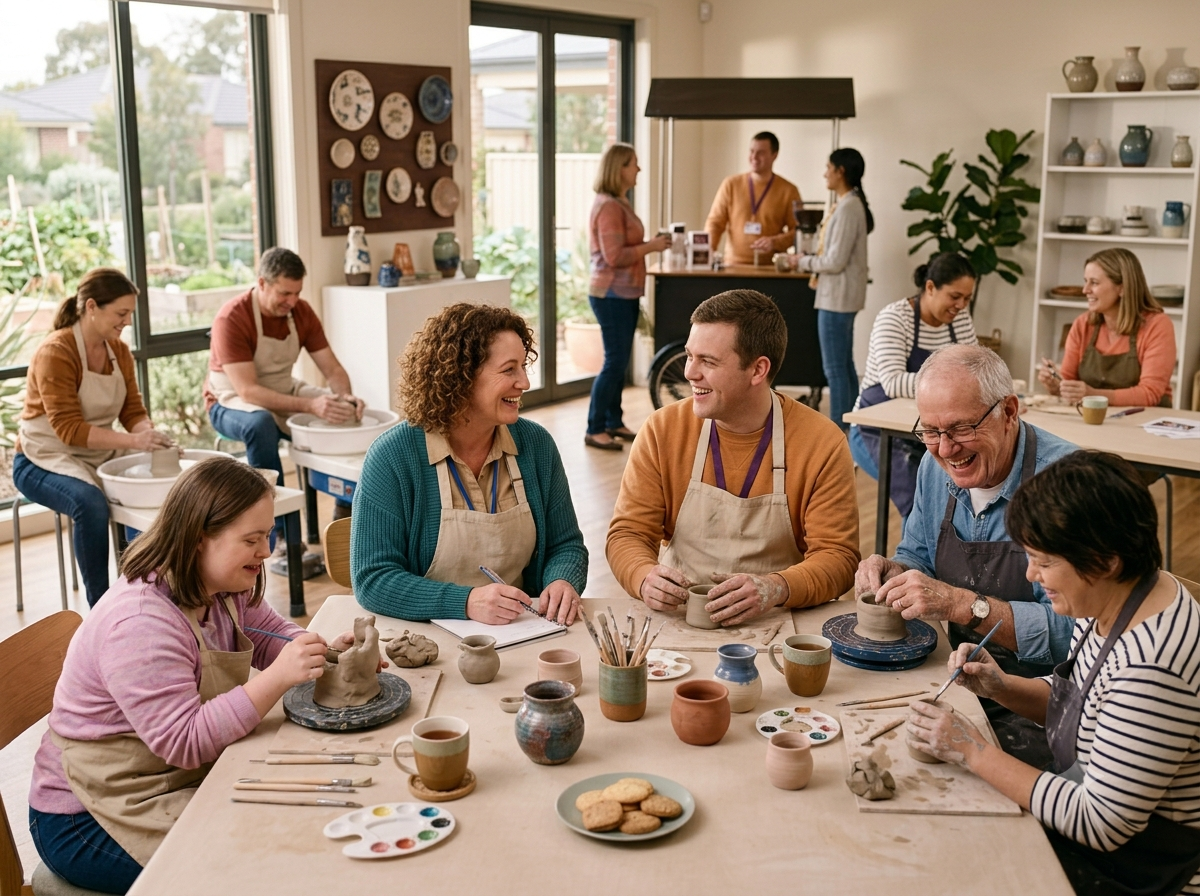
It also supports independence more broadly. Taking part in the community can be an opportunity to practise everyday skills — using transport, managing money on an outing, or navigating a familiar place — which links to building independent living skills.
What these supports can look like
Community participation looks different for each person, shaped by their interests and goals. Some real-world examples include:
- a support worker accompanying someone to a local library program, hobby group, or class;
- help getting to and taking part in a regular recreational activities program, such as swimming or a community sport;
- support to attend social gatherings, community events, or a place of worship;
- assistance to volunteer or take part in a group that matches the person's interests;
- support to simply get out and spend time in the community, keeping connected to local life.
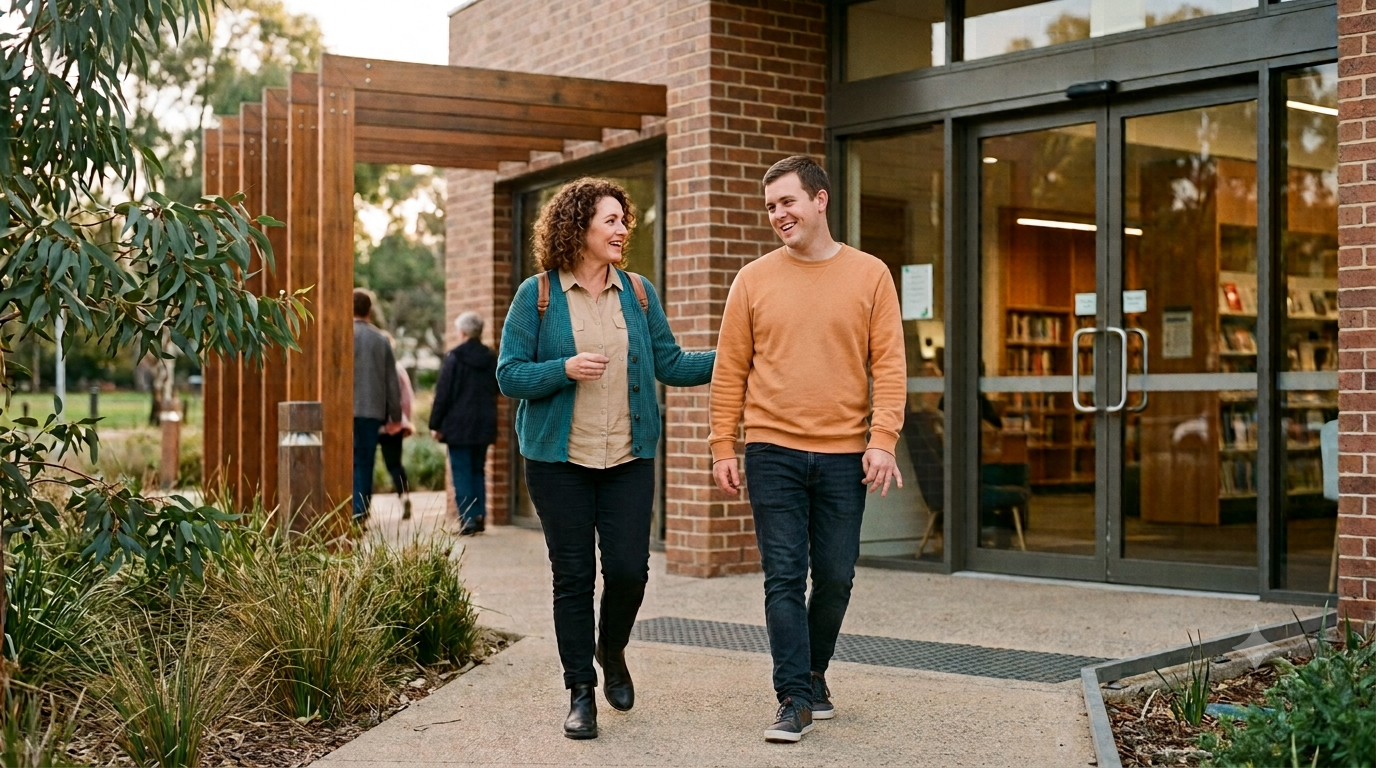
The common thread is that the support helps a person take part in a way they could not manage as safely or confidently alone.
Practical tip
Start with what genuinely interests the person. Community participation works best when it is built around real interests and connections, not activities chosen at random. Think about what the person enjoys or would like to try, then look for local opportunities that fit.
How community participation works with daily living
Daily living assistance and community participation often go together. A support worker might help someone with their morning personal care and meal, then support them to attend a community activity later the same day. Because Core Supports funding is generally flexible, many participants use it across both everyday tasks and getting out into the community. Families looking for community participation Deanside and nearby growth suburbs often find this joined-up model works especially well.
This joined-up approach reflects real life. People do not separate their day neatly into "home tasks" and "community" — support that flows across both tends to work best. Our guide to what Daily Life Assistance includes shows how the everyday supports fit together.
Where community participation sits in a plan
Support to take part in social and community activities is funded within an NDIS plan, and in the current structure this generally falls within the Core Supports budget, in a category focused on social and community participation. As with all supports, whether a specific activity is funded depends on the reasonable and necessary test for that person.
It is worth noting the boundary here too: the NDIS may fund the support that helps a person take part, but it does not generally fund entry fees, tickets, or the ordinary costs of activities that anyone would pay. Our how NDIS funding works for daily living support explains how these boundaries work across a plan.
Getting out and about safely
For many participants, getting to an activity is as important as the activity itself. Support can include help with transport and getting around, so that a person can attend community activities safely. Transport has its own place and rules within NDIS plans, and a support worker's assistance during an outing is treated differently from funding for the travel itself. If getting out is a priority for you, it is worth discussing transport specifically with your provider or coordinator.
Practical tip
When planning community activities, think about the whole journey — getting ready, travelling there, taking part, and getting home. Mapping out each step with your provider helps ensure the support is there where it is actually needed, and that outings feel manageable rather than daunting.
Melbourne context
Community life across Melbourne
Melbourne offers a rich range of community spaces — libraries, neighbourhood houses, community centres, sporting groups, and cultural and faith communities. Across the western suburbs, including Werribee, Tarneit, Point Cook, Sunshine, and Footscray, there are local hubs and activities within reach of most participants. Community participation Werribee and Footscray is well served by local providers. Our guide to local Daily Life Assistance resources across Melbourne's west brings together useful, area-specific information.
Key takeaways
- Community participation supports help a person take part in social, recreational, and community activities.
- Connection matters for wellbeing, confidence, routine, and a sense of belonging.
- These supports often work alongside daily living assistance across a person's day.
- Funding covers the support to take part, not entry fees or ordinary activity costs.
- Building activities around real interests makes participation meaningful and sustainable.
Frequently asked questions
Can a support worker take me to social activities?
Yes. Accompanying a person to social and community activities and supporting them to take part is a common form of community participation support. Whether it is funded for you depends on your plan and whether it is reasonable and necessary for your goals.
Will the NDIS pay for my movie tickets or event entry?
Generally no. The NDIS may fund the support that helps you take part, but it does not usually cover entry fees, tickets, or the ordinary costs of activities that anyone would pay. You would cover those costs yourself, as everyone does.
What kinds of activities count as community participation?
A wide range — social groups, classes, recreation, volunteering, community events, and time spent in the community. The activity should be meaningful to you and align with your goals. There is no fixed list; it is about genuine participation in community life.
Can I do community activities in a group?
Yes, community participation can happen individually or in group settings. Some people prefer one-to-one support; others enjoy group activities that create social connection. What suits you depends on your preferences and goals, which you can discuss with your provider.
How is this different from just having a support worker at home?
Home-based daily living support focuses on tasks like personal care and household help, while community participation focuses on taking part in social and community life. In practice they often combine, with the same support flowing across a person's day. Our beginner's guide to Daily Life Assistance explains the everyday side.
Can community participation help me build confidence?
For many people, yes. Taking part in the community can build confidence, create routine, and offer chances to practise everyday skills such as using transport or managing an outing. This connects closely to building independent living skills.
In summary
Getting out and staying connected helps people living with disability stay active and included — an essential part of living well. Working alongside daily living assistance, these supports help a person take part in the activities and communities that matter to them. Built around genuine interests, they can bring confidence, routine, and a real sense of belonging.
About Sahima Care Services
Staying connected to your community
Sahima Care Services is a registered NDIS provider supporting participants across Melbourne's western suburbs. We help people take part in the activities and communities they care about, alongside everyday support at home. If staying connected matters to you, our team would be glad to help.
Explore community participation support