Tailored support
Daily Living Support for Different Disabilities
No two people experience disability in the same way, and the disability support Melbourne providers offer works best when it is shaped around the individual rather than a diagnosis. This guide looks at how support can be tailored to different types of disability — physical, intellectual, sensory, cognitive, and psychosocial — while keeping the focus firmly on the person's own needs and goals. It is written to help you see how flexible, person-centred support can be.
In short
Daily living support adapts to the barriers a person actually faces. For a physical disability it may focus on personal care and mobility; for intellectual or cognitive disability, on prompting and supervision; for sensory disability, on accessible communication and safe navigation; for psychosocial disability, on routine and consistency. What is funded always depends on the individual's plan and the reasonable and necessary test.
On this page
Person first, not diagnosis
An important principle underpins everything in this guide: support is built around the person, not the label. Two people with the same diagnosis can have very different needs, strengths, and goals. The NDIS reflects this by assessing what is reasonable and necessary for each individual, rather than assigning a fixed package to a diagnosis.
The categories below are a helpful way to understand common patterns, but they are not rigid boxes. Many people do not fit neatly into one, and support should always be shaped around the specific barriers a person experiences in daily life.
Physical disability
For people with a physical disability, daily living support often focuses on tasks affected by mobility, strength, or physical function. This can include help with personal care such as showering, dressing, and toileting; support with safe mobility and transfers, such as getting in and out of bed; and assistance with household tasks and meal preparation that are difficult or unsafe to manage physically.
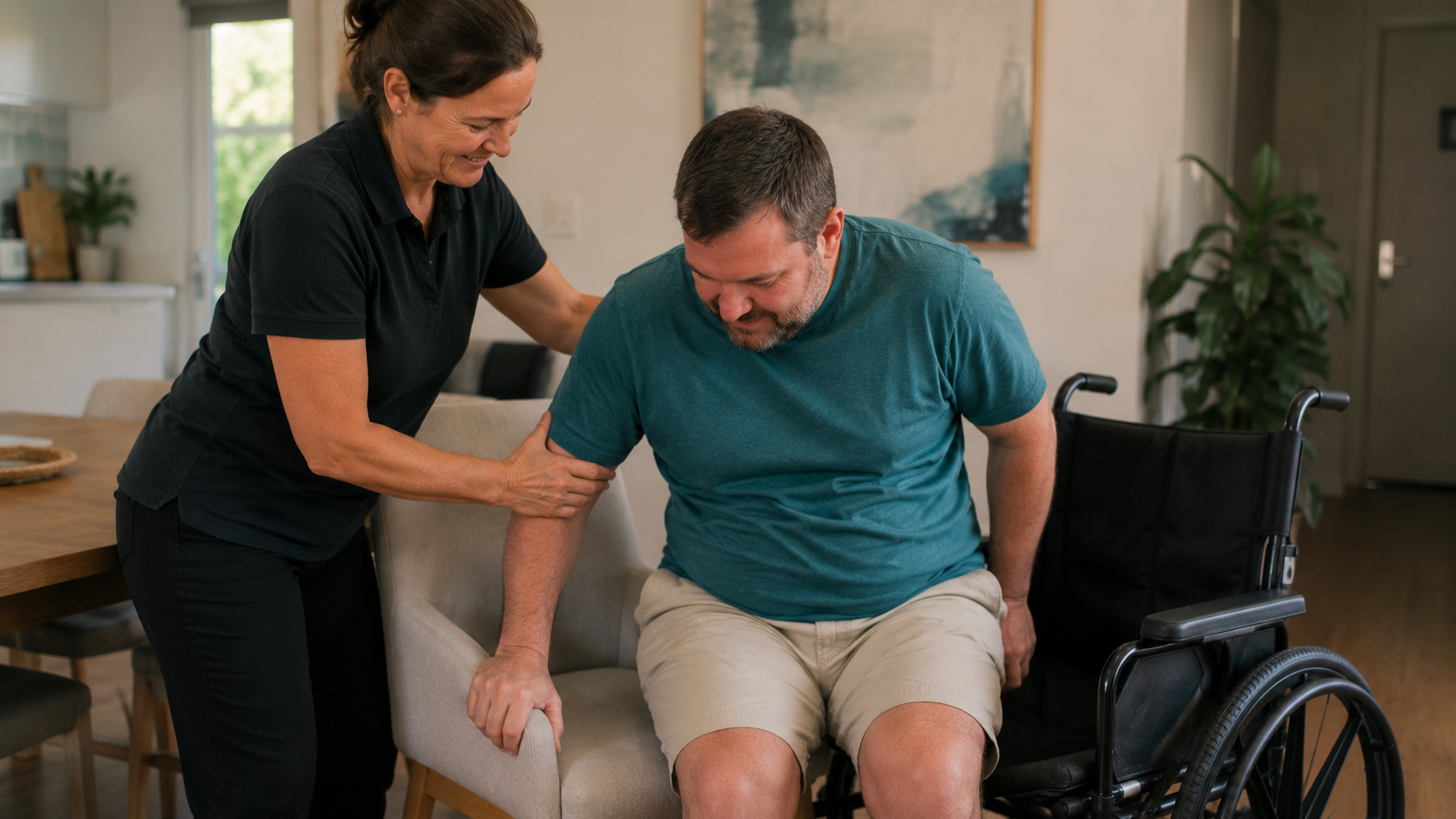
The aim is to enable a person to live safely and comfortably while maintaining as much independence and dignity as possible. Where a person wants to build capability — for example, managing more of a task themselves over time — support can be delivered in a way that encourages this, connecting to building everyday independence. This is where independent support workers make a real difference, adjusting the balance of help as a person's needs change.
Intellectual and cognitive disability
For people with an intellectual disability or a cognitive disability, the barrier in daily life is often less about physical capability and more about prompting, structure, and supervision. Support may focus on guiding a person through the steps of everyday tasks, providing reminders and routine, and offering the supervision needed to do things safely.
This kind of support is very much about enabling participation. A worker might prompt someone through their morning routine, support them to prepare a familiar meal step by step, or help them keep to a manageable weekly structure. Consistency and patience matter greatly here, and support that builds confidence over time can be especially valuable.
Practical tip
For tasks that involve prompting or routine, consistency of approach helps. Where possible, having workers who understand the person's routines and communicate in a familiar, predictable way can make daily support calmer and more effective. Discuss this with your provider when arranging support.
Sensory disability
For people who are blind or have low vision, or who are Deaf or hard of hearing, daily living support often centres on accessible communication and safe navigation of the home and community. Support might include assistance with tasks that rely on sight or hearing, help getting around safely, and communication in the person's preferred format.
Respecting a person's preferred way of communicating is central. Support that works with a person's communication needs — rather than around them — makes everyday tasks and community participation far more accessible.
Psychosocial disability
Psychosocial disability relates to the impact that mental health conditions can have on a person's daily functioning. Daily living support here often focuses on maintaining routine, supporting daily structure, and providing consistent, reliable help that a person can depend on. It might include support to keep up daily tasks, prompting and encouragement, and help staying connected to the community.
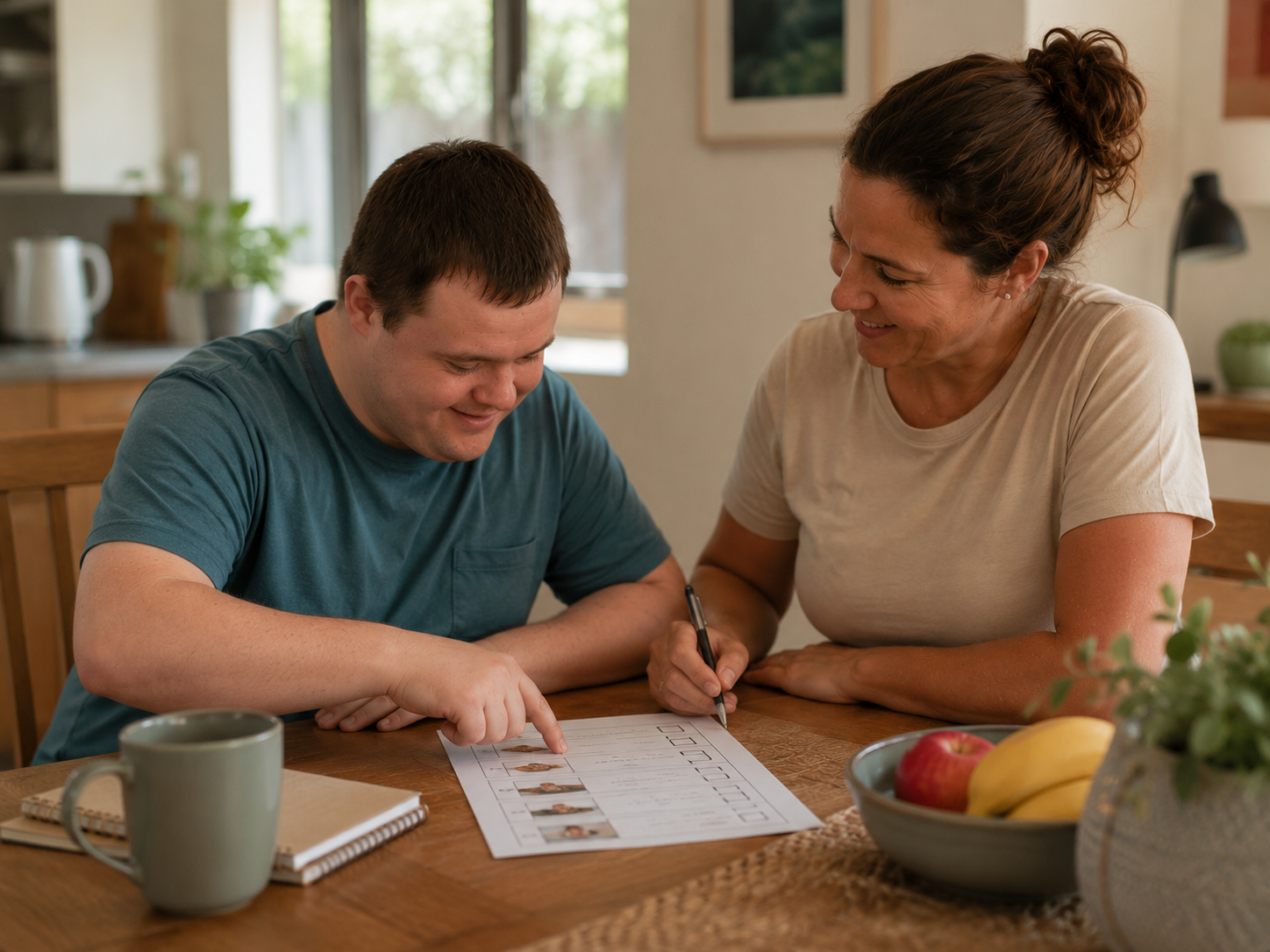
An important point recognised across the disability sector is that recovery in mental health is often not linear — it can vary over time. Support that is flexible, patient, and consistent tends to work best. The relationship of trust between a person and their NDIS support workers can be particularly significant.
Practical tip
For psychosocial disability, reliability and trust are often as important as the specific tasks. Consistent workers who show up dependably and build a respectful relationship can make daily support genuinely stabilising. When choosing a daily living support provider in Melbourne, ask how they support consistency — our guide to choosing a daily living support provider in Melbourne covers this.
When needs overlap
Many people experience more than one type of disability, or needs that do not fit a single category. A person might have both a physical and a psychosocial disability, for example, or a cognitive disability alongside sensory needs. In these situations, support is shaped around the full picture of the person's daily life rather than treating each need separately. This individual approach is the same for disability support Thornhill Park or any of the surrounding suburbs.
This is exactly why the NDIS assesses each person individually. The goal is support that reflects how a person actually lives, with all their strengths and challenges considered together. Our guide to what Daily Life Assistance includes shows how the different supports can be combined.
Melbourne context
Tailored support across Melbourne
Melbourne's broad disability support sector means participants with a wide range of needs can generally find providers experienced in supporting different disabilities. Across the western suburbs, including Werribee, Tarneit, Point Cook, and St Albans, this variety helps participants find support that genuinely fits their circumstances. Disability support Point Cook and St Albans benefits from a provider willing to understand the individual and shape support accordingly. Our guide to local Daily Life Assistance resources across Melbourne's west offers more local detail.
Key takeaways
- Support is built around the person and their individual needs, not around a diagnosis.
- Physical disability support often focuses on personal care, mobility, and safe household tasks.
- Intellectual and cognitive disability support often centres on prompting, structure, and supervision.
- Sensory disability support focuses on accessible communication and safe navigation.
- Psychosocial disability support values routine, consistency, and trusted relationships.
- Many people have overlapping needs, which is why the NDIS assesses each person individually.
Frequently asked questions
Does the type of my disability decide what support I get?
Not on its own. The NDIS assesses what is reasonable and necessary for you as an individual, considering your specific needs, goals, and circumstances. Two people with the same diagnosis can receive very different support, because their daily lives and needs differ.
Can support workers help with prompting rather than doing tasks?
Yes. Prompting and supervision — guiding a person through the steps of a task so they can do it themselves — is a legitimate and common form of daily living support. It is especially relevant for intellectual, cognitive, and some psychosocial disabilities.
Is daily living support suitable for mental health conditions?
Daily living support can help people with psychosocial disability maintain routine, structure, and daily tasks, delivered with consistency and patience. Whether it is funded for you depends on your plan and whether it is reasonable and necessary. Clinical mental health treatment is a separate matter handled through the health system.
What if I have more than one disability?
Support is shaped around your whole situation, not each condition separately. Many participants have overlapping needs, and the NDIS assesses each person individually so that support reflects how you actually live. A provider experienced with complex needs can help.
Can support adapt if my needs change?
Yes. Needs can change over time, and support can adapt. Core Supports funding is generally flexible, and you can request a review or reassessment of your plan if your circumstances change significantly. Your provider and coordinator can help you recognise when to revisit your supports.
How do I find a provider experienced with my disability?
When speaking with providers, ask about their experience supporting people with needs similar to yours and how they tailor support. Our guide to choosing a daily living support provider in Melbourne sets out useful questions to ask and signs of quality support.
In summary
Good, person-centred support is at its best when it is tailored to the individual — responding to the real barriers a person faces rather than following a template based on diagnosis. Whether the focus is personal care, prompting, accessible communication, or consistent routine, tailored support helps each participant live safely and well. The NDIS's individual assessment is what makes this tailoring possible.
About Sahima Care Services
Support shaped around you
Sahima Care Services is a registered NDIS provider supporting participants across Melbourne's western suburbs. We take time to understand each person's individual needs and shape support accordingly. If you would like to talk about what support could look like for your situation, our team is here to help.
Tell us about your needs