Independence
Independent Living Skills and Building Everyday Independence
For many NDIS participants, support is not only about getting help today — it is about building the confidence and skills to do more tomorrow. This guide explains what independent living support Melbourne participants can access looks like in practice, how daily living support can help develop it, and where skill-building fits within an NDIS plan. It is written for people who want to understand how support and independence work together, rather than pulling against each other.
In short
Independent living skills are the everyday abilities that help a person manage their own life — cooking, cleaning, budgeting, personal care, and managing routines. Daily living support can help build these skills at a person's own pace. Where the goal is specifically to develop a skill through therapy or training, that support may be funded through Improved Daily Living (Capacity Building) rather than everyday Core Supports.
On this page
What building independent living skills are
Independent living skills are the practical abilities that let a person manage day-to-day life with as much autonomy as possible. They cover a broad range, including preparing meals, keeping a home clean and organised, managing laundry, handling money and budgeting, looking after personal care, using transport, and keeping to routines and appointments.
No one is expected to master every skill, and independence looks different for everyone. For one person it might mean cooking a simple meal safely; for another it might mean managing a weekly routine with less prompting. The aim is progress that is meaningful to the individual, not a fixed standard.
Why building skills matters
Developing everyday skills can have a real effect on a person's confidence, wellbeing, and sense of control. Being able to do more for yourself — even in small ways — can reduce reliance on others, open up choices, and support a stronger sense of dignity and self-worth. For many participants, growing independence is one of the most valued outcomes of their NDIS journey.
It is worth being clear-eyed, too: building skills takes time, and support does not disappear the moment a person learns something new. Independence and ongoing support are not opposites. Many people build skills in some areas while continuing to receive help in others.
How support helps build skills
A skilled NDIS support worker Melbourne families choose can help a person develop everyday skills through patient, practical support. Rather than simply doing a task, the worker guides the person through it — breaking it into steps, prompting where needed, and gradually stepping back as the person gains confidence. This might look like:
- supporting someone to cook a familiar meal, step by step, until they can manage more of it themselves;
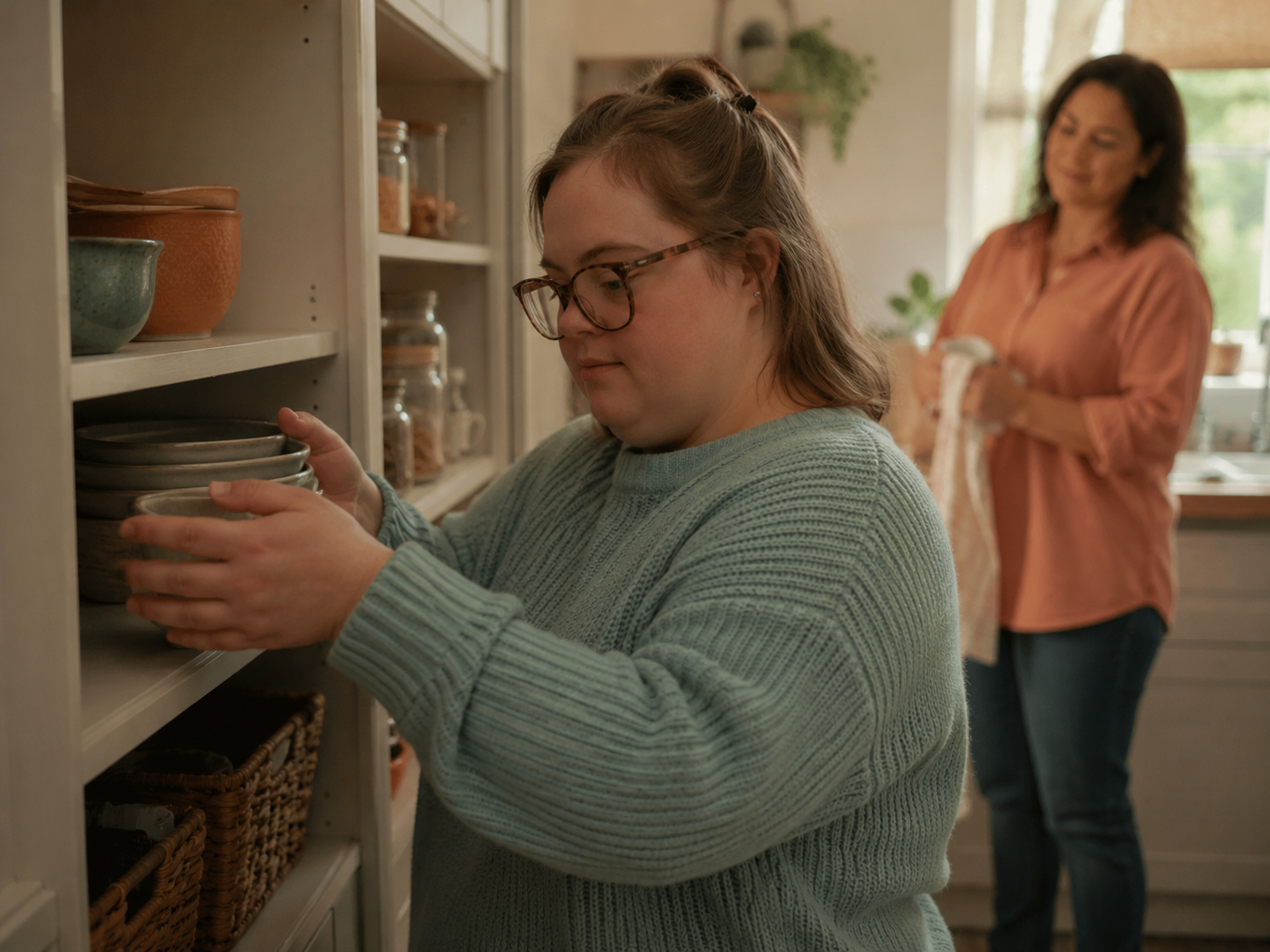
- helping a person establish and follow a manageable cleaning or laundry routine;
- working alongside someone as they learn to organise their week and keep to appointments;
- practising personal care routines in a way that builds confidence and consistency.
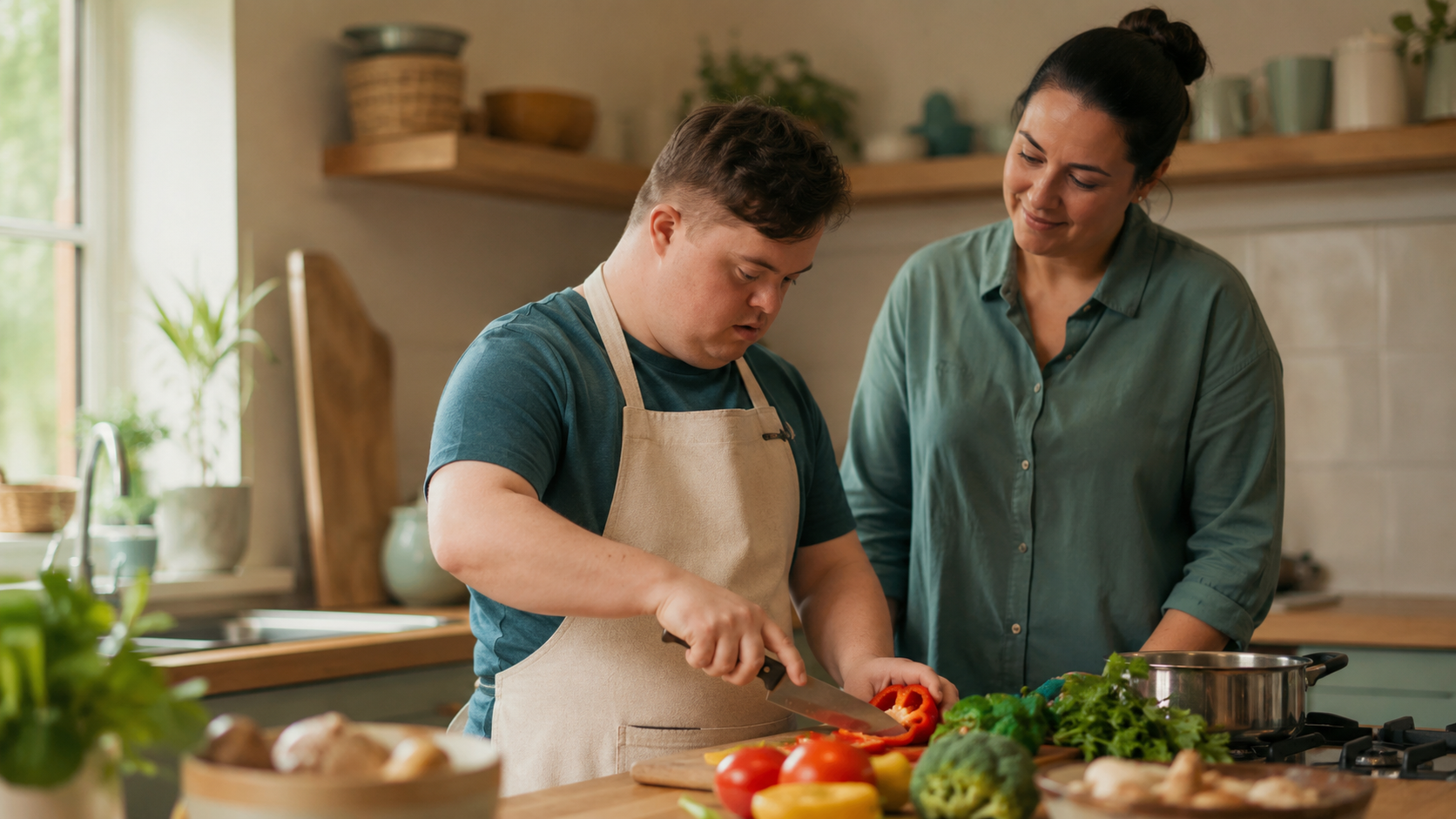
This approach connects directly to the idea, covered in our beginner's guide to Daily Life Assistance, that daily living support can mean helping a person do something themselves, not only doing it for them.
Practical tip
Pick one or two skills to focus on at a time rather than trying to change everything at once. Small, achievable goals build momentum and confidence. Talk with your provider about which everyday skill would make the biggest difference to your daily life, and start there.
Where skill-building sits in an NDIS plan
This is where an important distinction comes in. Everyday help with daily tasks is funded through Assistance with Daily Life in the Core Supports budget. But where the goal is specifically life skills development through structured therapy, training, or assessment, that support may be funded through Improved Daily Living, which sits in the Capacity Building budget.
The two work together. A person might have a support worker helping with daily tasks (Core Supports) while also working with an occupational therapist to build a specific skill (Capacity Building). Understanding this helps you make sense of your plan. We explain the difference in detail in Daily Living support versus other NDIS supports.
Working at the right pace
Building skills is not a race, and pushing too fast can undermine confidence rather than build it. A good support arrangement moves at the person's pace, celebrates small wins, and adjusts when something is not working. Some skills come quickly; others take patient, repeated practice. Setbacks are a normal part of learning, not a sign of failure. Our team provides independent living support Aintree and the surrounding growth corridor with this same patient, person-led approach.
Practical tip
Keep a simple note of progress — even small steps. Being able to look back and see how far you have come is motivating, and it is genuinely useful evidence when your plan is reviewed and you are discussing your goals for the next period.
Balancing help and independence
A common worry is that asking for help somehow works against independence. In practice, the two support each other. Receiving reliable help with the tasks that are genuinely difficult frees up a person's energy to focus on building skills where progress is possible. The goal is not to do everything alone, but to live as fully and independently as each person wants and is able to.
Melbourne context
Building independence in Melbourne
Living in a well-connected city like Melbourne can support the development of everyday skills — from learning to use local transport to taking part in community activities near home. Across the western suburbs, such as Point Cook, Tarneit, and Hoppers Crossing, participants can build independence in familiar surroundings with support that knows the local area. Building independence Point Cook and Tarneit benefits from community involvement, which we explore in community participation and daily living in Melbourne.
Key takeaways
- Independent living skills are the everyday abilities that help a person manage their own life.
- Daily living support can build these skills through patient, step-by-step help, not only doing tasks for a person.
- Everyday help sits in Core Supports; structured skill-building often sits in Improved Daily Living (Capacity Building).
- Building skills takes time and works best at the person's own pace, with small, achievable goals.
- Receiving help and building independence support each other — they are not opposites.
Frequently asked questions
Can a regular support worker help me build skills, or do I need a therapist?
A support worker can help you practise and build everyday skills as part of daily living support. Where a skill needs structured, professional intervention — such as therapy or a formal training program — an allied health professional funded through Capacity Building may be involved. Often the two work together.
Will building skills mean I lose my funding?
Building skills is a common and valued NDIS goal, and support does not simply vanish because a person becomes more independent. Plans are reviewed based on individual need. If your circumstances change, your plan can be reassessed. Growing independence is something the NDIS encourages, not penalises.
What skills are most useful to focus on first?
That depends entirely on you. Many people start with a skill that would make the biggest practical difference to daily life — often meal preparation, managing a routine, or personal care. Choosing one or two focus areas at a time tends to work better than trying to change everything at once.
How long does it take to build a new skill?
There is no set timeframe — it varies with the person, the skill, and the support. Some skills come quickly; others take patient, repeated practice over months. Setbacks are normal. Working at your own pace and noting small wins helps keep the process encouraging.
Can I build skills if I have high support needs?
Independence looks different for everyone, and building skills is not limited to people with lower support needs. Even where significant help is needed, there may be meaningful areas where a person can build confidence and do more. The focus is on what is meaningful and achievable for the individual.
How do I include independence goals in my plan?
When you meet with the NDIA or your coordinator, describe the everyday skills you would like to develop and why they matter to you. Clear, specific goals help the right supports be considered. Our guide on how NDIS funding works for daily living support explains how goals connect to what is funded.
In summary
Independent living skills are the everyday abilities that help a person live life on their own terms, and daily living support can play a real part in building them. With patient, step-by-step help — and, where relevant, skill-building support through Capacity Building — participants can grow their confidence and independence while still receiving help where they need it. See how our support works, since support and independence go together.
About Sahima Care Services
Support that grows with you
Sahima Care Services is a registered NDIS provider supporting participants across Melbourne's western suburbs. We help with everyday tasks while supporting people to build confidence and independence at their own pace. If you would like to talk about your independence goals, our team is here to listen.
Share your goals with us