NDIS guides
Does the NDIS Pay for Bedding and Changing Bed Linen?
In short
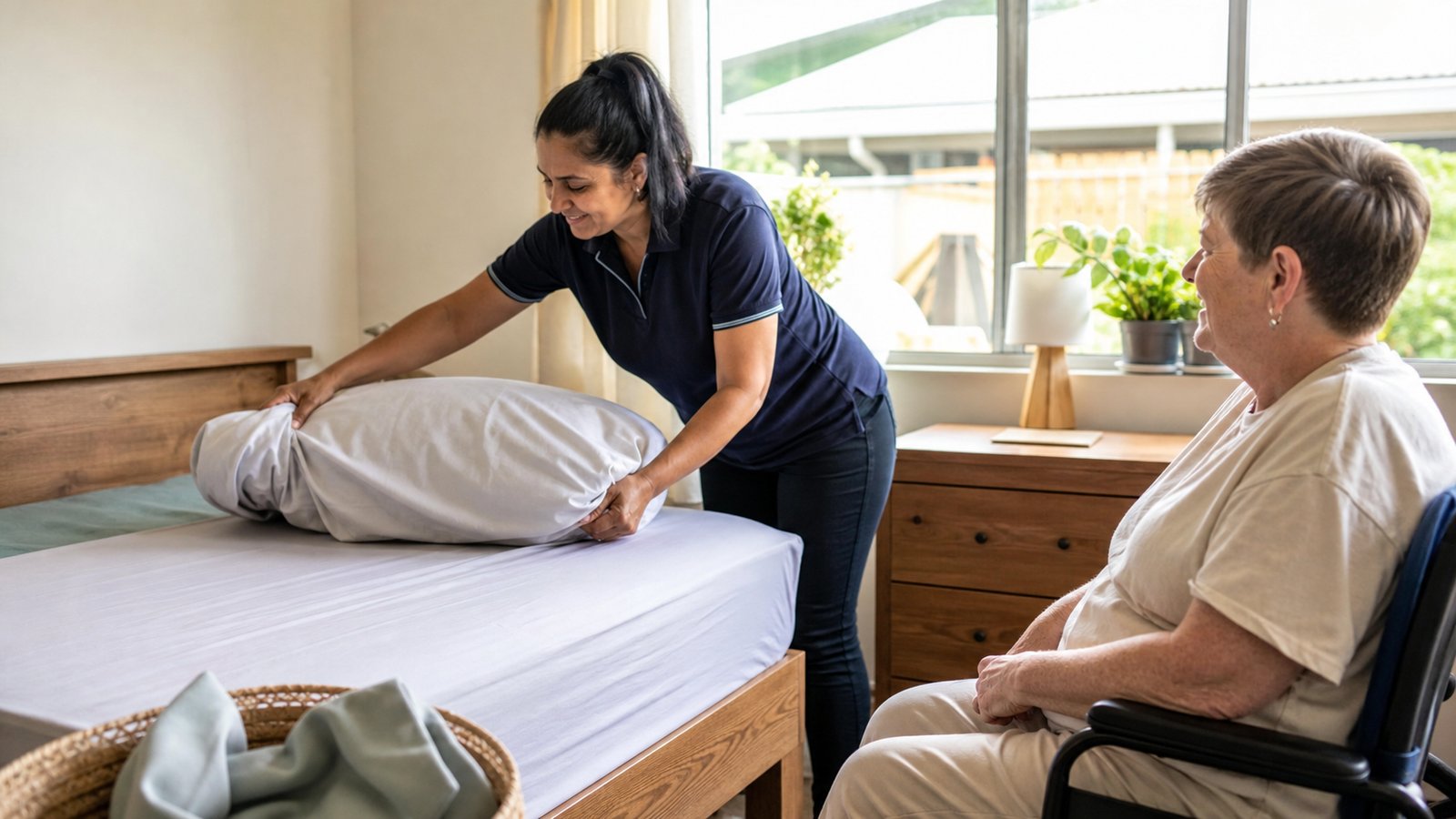
The NDIS may fund help with changing and washing bed linen when it is related to a participant's disability support needs. Ordinary bedding such as sheets, pillows and doonas is generally an everyday living expense and isn't usually funded. Specialised bedding may be considered as assistive technology when it addresses a disability-related need.
- Changing and washing bedding → may be funded
- Buying ordinary bedding → generally not funded
- Specialised bedding or equipment → may require an assistive technology assessment
On this page
Why this question has two answers
When people ask whether the NDIS pays for bedding, they mean one of two quite different things — and the answers go in opposite directions.
| What you're asking | Short answer | Funding pathway |
|---|---|---|
| Help changing and washing sheets | Usually may be covered | Core Supports / household tasks |
| Buying ordinary sheets, doonas and pillows | Usually not covered | Ordinary living costs |
| Specialised bedding for a disability-related need | May be considered | Assistive technology |
Getting the categories right saves time. Asking your household tasks provider to fund a pressure-relieving mattress will not work — it is the wrong pathway, not necessarily a refusal.
Changing and washing bed linen
Changing and washing bed linen may be provided as part of NDIS household task support when it relates to a participant's disability-related needs and meets the relevant NDIS requirements. A worker can typically:
- Strip the bed and remake it with clean linen
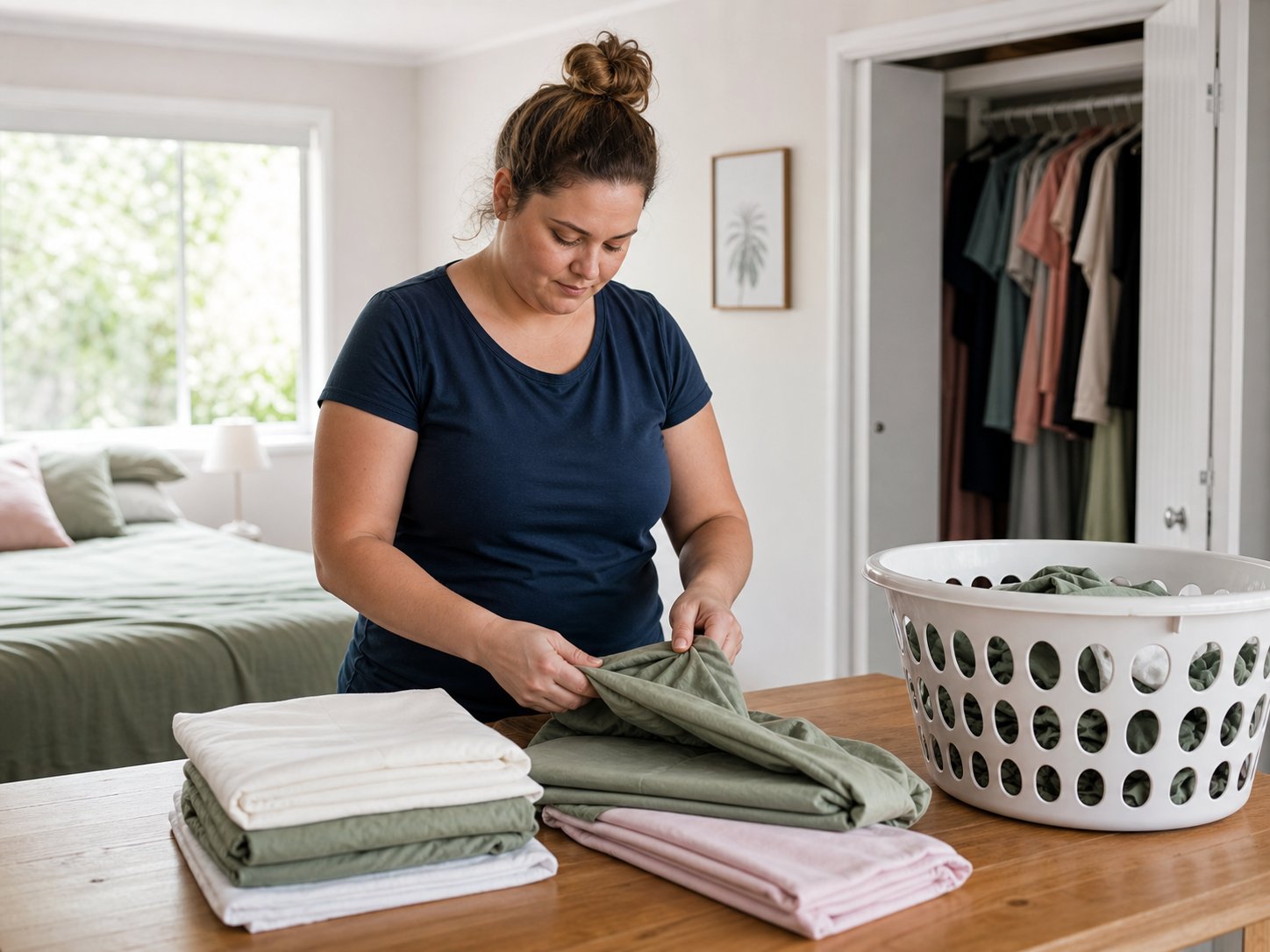
- Wash, dry, fold and put away sheets, pillowcases and towels
- Change bedding more frequently where continence needs require it
- Turn or air a mattress within safe lifting limits
- Make the bed as part of a regular tidy
Buying ordinary bedding
Standard sheets, pillows, blankets and doonas are treated as ordinary living costs. Everyone needs them, disability or not, so they generally sit outside NDIS funding.
The same principle generally applies to other everyday household purchases, such as ordinary towels, laundry detergent and replacement household items.
There is one nuance worth knowing: where a disability causes bedding to wear out or be damaged far faster than normal, that additional cost is sometimes raised at plan reassessment. It is not a routine inclusion and would need evidence, but it is not automatically off the table either.
When specialised bedding may be funded
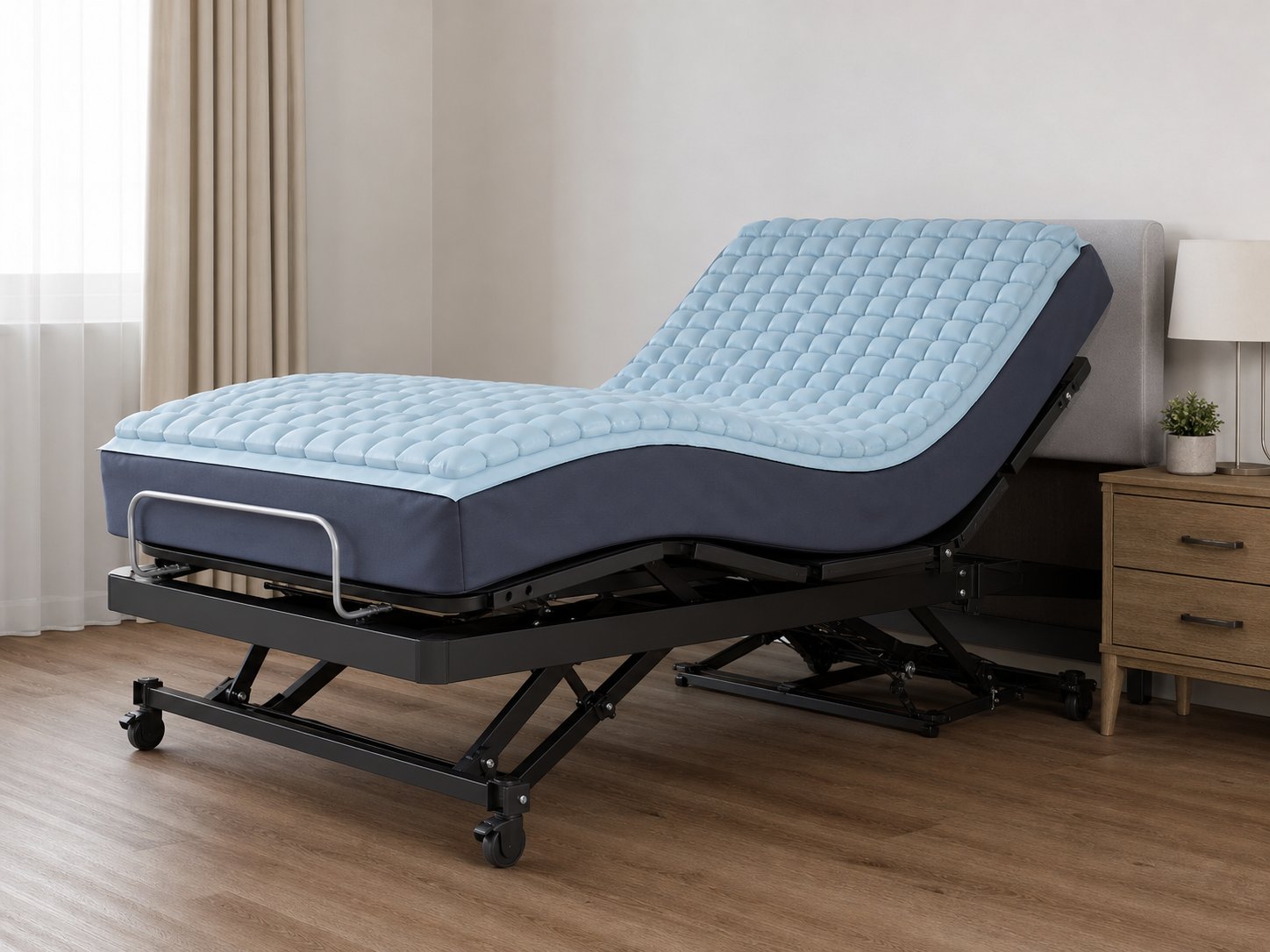
Some bedding is not really bedding — it is equipment. Where an item exists to address a disability-related need rather than an ordinary comfort preference, it may be assessed as assistive technology under Capital Supports.
Examples of disability-related equipment that may require consideration through assistive technology include:
- Pressure-relieving equipment
- Specialised mattresses or overlays — sometimes searched as an NDIS mattress
- Adjustable or electric beds — often searched as an NDIS approved adjustable bed
- Bed rails or transfer equipment
- Specialised positioning equipment
Whatever term you've seen used — adjustable bed, electric bed, hospital bed — the pathway is the same: it's assessed as equipment, not claimed as a household task, regardless of which supplier or NDIS bed provider you end up going through.
Funding depends on individual circumstances and NDIS requirements. This pathway generally requires an assessment from an appropriate professional — often an occupational therapist — evidence of the disability-related need, and depending on cost, quotes and NDIA approval. It is not something a support worker or a household tasks provider can arrange.
Where to start. If you think you need specialised bedding, speak to your occupational therapist or support coordinator rather than your household tasks provider. They can advise whether it meets the assistive technology criteria and what evidence you'd need.
Bed rails and transfer equipment are sometimes assessed alongside broader home changes — grab rails, ramps or bathroom modifications — rather than in isolation. If that's the situation you're in, our NDIS home modification services in Melbourne page covers that separate pathway.
Bedding and continence needs
Participants with continence-related needs may need to change bedding more frequently. The time required to change and wash bedding can form part of household task support where it relates to disability-related needs.
Some of this need is met with everyday items — waterproof bedding, protective mattress covers and incontinence bed sheets are common examples — and some falls under NDIS continence products, which is its own consumables category rather than household tasks or assistive technology.
| Need | Possible pathway |
|---|---|
| Time spent changing and washing bedding | Household tasks |
| NDIS continence products | Consumables, where applicable |
| Waterproof bedding and protective equipment | May involve assistive technology |
In Yarraville, our team is happy to talk through bedding and continence-related needs directly — see our NDIS provider Yarraville. Sahima Care Services provides assistance with cleaning, laundry, bedding and other everyday household tasks, depending on individual needs and funding.
Common questions
Can a support worker change my bed if I have a king-size mattress?
Usually yes, though providers apply safe lifting limits and some may require two workers or a mattress lifting aid for very heavy mattresses. Worth raising before the first visit.
Will the NDIS replace bedding damaged because of my disability?
Not as a routine inclusion — ordinary replacement is generally your own cost. Where a disability causes damage well beyond normal wear, it's worth raising at plan reassessment with supporting evidence, but there's no guarantee.
Is an adjustable bed funded as bedding or equipment?
As equipment — assistive technology under Capital Supports, not household tasks. This applies whether it's described as an adjustable bed or an electric bed. It generally requires an assessment, evidence of disability-related need, and depending on the cost, quotes and NDIA approval.
How often will a worker change my sheets?
Whatever you agree, within your funded hours. Weekly or fortnightly is typical; more frequent changes are common where continence needs require it.
Sources and further reading
- NDIA, NDIS Pricing Schedule 2026-27 — item 01_020_0120_1_1
- NDIA, Assistive technology explained
Pricing figures reflect the NDIS Pricing Schedule 2026-27, effective 1 July 2026. Price limits are reviewed each July — confirm the current figure on ndis.gov.au before relying on it.