NDIS guides
What Cleaning Tasks Can an NDIS Support Worker Help With?
In short
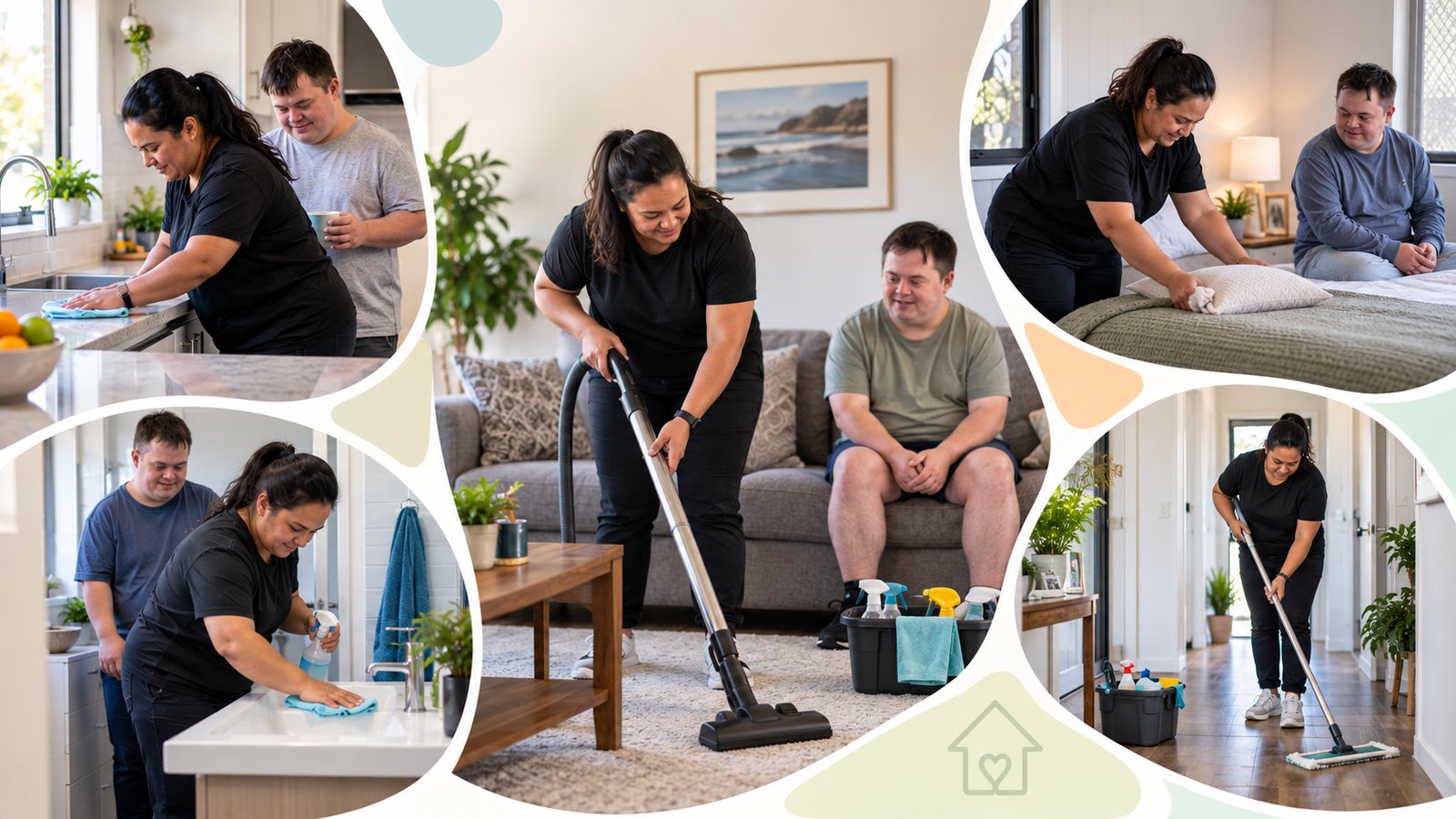
An NDIS support worker providing household task support may help with cleaning, vacuuming, mopping, dusting, bathroom and kitchen cleaning, dishes, laundry, changing bedding and general tidying. The specific tasks depend on your disability-related needs, NDIS funding and what you agree with your provider.
On this page
There is no official task list — and that's deliberate
The NDIS does not provide a simple room-by-room checklist of every cleaning task an NDIS support worker can perform. Instead, the relevant support item describes the type of household assistance that may be provided, written broadly so it can flex to individual circumstances.
What that means in practice is that the boundaries are set by three things:
- Your disability-related needs — the task has to connect back to something your disability makes hard
- Your NDIS plan and available funding — the real constraint for most people
- The provider's service agreement and work health and safety requirements — what their workers are trained, insured and permitted to do
The third one surprises people. Providers may have different policies about particular tasks based on worker training, equipment, insurance and work health and safety requirements — so two providers can give different answers about the same task, and both can be right. Whether you call the person delivering it a support worker or a domestic support worker, the same reasoning applies. Our NDIS household task support in Melbourne team can walk you through what our workers do and don't take on.
What can an NDIS support worker help clean?
Depending on your disability-related needs, agreed support and provider policies, household task support may include:
- Kitchen surfaces and dishes
- Bathroom and toilet
- Floors
- Bedrooms and bedding
- Laundry
- Living areas
- Rubbish and recycling
- General household tidying
The exact tasks aren't automatically guaranteed just because they appear on this list. Your provider should agree the tasks with you based on your needs and their service arrangements.
This is what most people mean by NDIS home cleaning in practice — you'll also see providers describe their team as "NDIS approved cleaners", though the accurate term is NDIS registered, not approved.
Room by room: what's usually included
| Area | Commonly included |
|---|---|
| Kitchen | Washing or stacking dishes, wiping benches and splashbacks, cleaning the stovetop and sink, wiping the outside of appliances, cleaning inside the microwave, emptying and cleaning the bin, wiping accessible fridge surfaces and basic tidying, where agreed |
| Bathroom and toilet | Cleaning the shower, bath, basin and toilet, wiping mirrors and surfaces, mopping the floor, replacing towels, emptying the bin |
| Bedroom | Changing sheets, making the bed, vacuuming, dusting surfaces, folding and putting away laundry, keeping walkways clear |
| Living areas | Vacuuming and mopping, dusting, wiping down surfaces, tidying, straightening cushions and throws |
| Laundry | Washing, hanging or drying, folding, putting away, wiping down the machine and tub |
| General | Taking rubbish and recycling to the bin, putting bins out and bringing them in, light tidying, keeping paths clear for mobility equipment |
The tasks people are most unsure about
Dishes
Washing dishes, loading or unloading a dishwasher and putting dishes away can form part of household task support when the activity relates to the participant's disability-related needs and is agreed with the provider.
Rubbish and bins
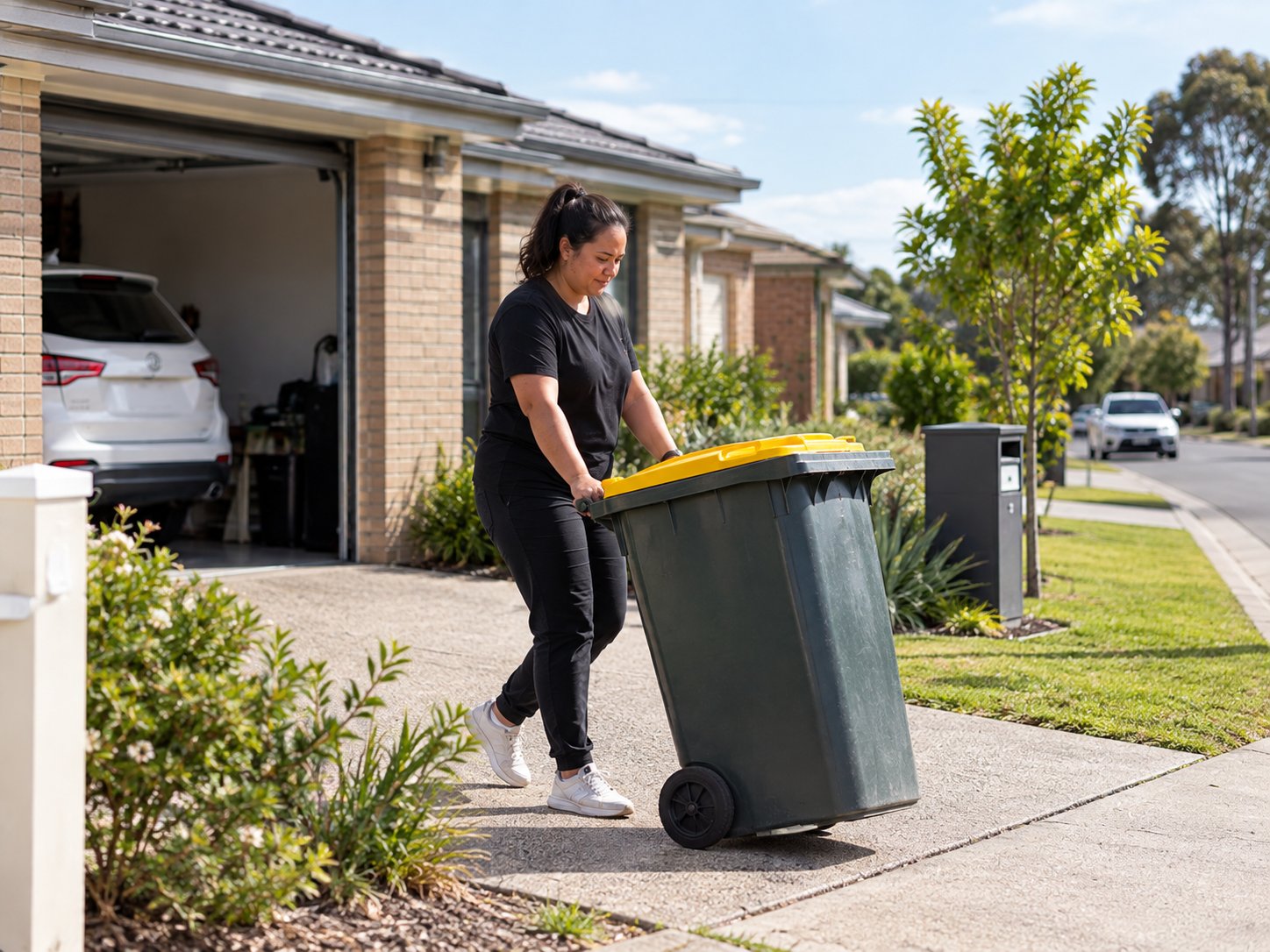
Emptying internal bins, taking bags to the outside bin, and putting bins out for collection are all normal. This one matters more than it sounds — for a lot of participants, wheeling a full bin down a driveway is the single hardest task in the week.
The shower
Cleaning the shower can form part of household task support when it is an agreed disability-related household task. Where providers differ is on how: some prohibit workers from standing inside a wet shower recess or using harsh chemical products without ventilation, for genuine safety reasons. Ask how your provider handles it rather than assuming it is refused.
Tidying versus cleaning
These are not the same thing and are worth naming separately in your service agreement. Cleaning is removing dirt. Tidying is putting things where they belong — which requires knowing where they belong. If tidying matters to you, say so explicitly and show a new worker your system.
Windows
Some providers may assist with reachable internal windows and glass, subject to their safety policies and the participant's agreed support. External windows, ladders and second-storey glass are examples of tasks that may require specialist services, usually excluded on height and safety grounds.
Pet-related cleaning
Routine cleaning of pet hair may be included where it forms part of the participant's household task needs. Tasks involving animal waste, litter trays or other higher-risk cleaning should be discussed with the provider first.
Tasks that may be outside a support worker's scope
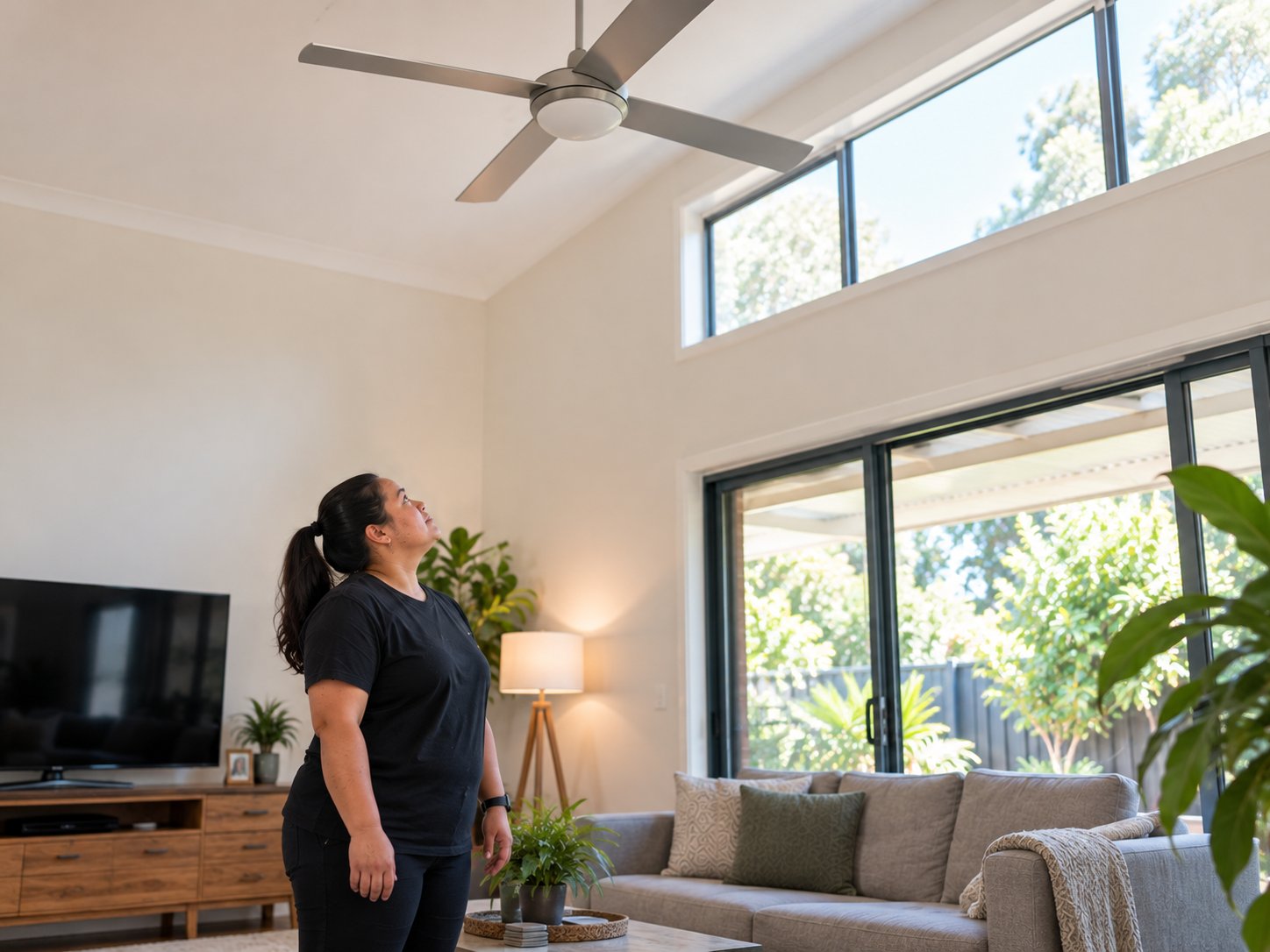
- Working at height — ladders, gutters, high windows, ceiling fans beyond safe reach
- Heavy lifting and furniture moving — most providers cap what a worker may lift alone
- Structural cleaning — mould remediation, pressure washing, carpet steam cleaning
- Biohazard work — beyond routine continence-related cleaning
- Extensive or specialist deep-cleaning — particularly where it requires specialist equipment, chemicals or substantially more time than your funded support allows
- Tasks for other household members without disability-related need
If a worker declines a task, it is usually a work health and safety policy rather than a judgement about you. It is completely reasonable to ask which policy applies and whether the task could be done differently — or whether the provider can arrange a specialist for it.
Basic yard or garden tasks may be covered under relevant NDIS home maintenance or household-related supports where the participant meets the applicable requirements — the correct support item depends on the task and the participant's circumstances. Some providers, including ours, deliver this as part of the same visit under NDIS gardening services. If that's part of what you need, it's worth raising it directly with your provider rather than assuming it's excluded.
Getting the most out of the hours you have
The number of funded hours varies between participants, so it helps to prioritise the tasks that matter most rather than trying to cover everything every visit.
- Rank your tasks. Decide the two or three things that must happen every visit, and a second tier for when there's time.
- Rotate the rest. Bathroom and floors every visit; oven, fridge and skirting boards on a rotating cycle.
- Write it down. A short task list stuck inside a cupboard door removes the guesswork, especially with a new worker.
- Sequence around waiting time. Start the washing machine first, clean while it runs.
- Review it after a month. Almost everyone's first list is too ambitious.
If you're in Altona and want to check which of these tasks fits your plan before committing to anything, see our NDIS provider Altona. Sahima Care Services can discuss your needs and the household tasks our team provides.
Common questions
Can a support worker clean up after my family?
NDIS household task support generally relates to the participant's disability-related needs. In a shared home, the support may focus on the participant's areas and shared spaces they use rather than cleaning for other household members.
Can I change what tasks the worker does each visit?
Yes. Your service agreement sets the broad scope, but within it you can direct what happens on the day. Choice and control over how your support is delivered is a core NDIS principle.
What if the worker isn't cleaning to the standard I expect?
Raise it with the provider early and be specific about what you want done differently. If it doesn't improve, you can request a different worker or change providers — you're not locked in.
Do I need to supply the cleaning products?
Usually yes. Products and equipment are treated as ordinary living costs. Some providers bring their own basics — worth asking before your first visit.
Sources and further reading
- NDIA, NDIS Pricing Schedule 2026-27 — item 01_020_0120_1_1
- NDIS Quality and Safeguards Commission, NDIS Practice Standards
Pricing figures reflect the NDIS Pricing Schedule 2026-27, effective 1 July 2026. Price limits are reviewed each July — confirm the current figure on ndis.gov.au before relying on it.